Care & Installation
The Travertine Installation Mistakes That Show Up a Year Later
Most travertine problems are not material failures. They are substrate, adhesive, grout and finish decisions — all of which are cheap to get right on day one and expensive to redo.
Travertine is not a difficult stone to install badly in the way that some materials are. It does not demand a special adhesive, it does not require a specialist trade to cut, and it will go down with the same tools as any other tile. That is exactly why the mistakes below are common: nothing warns you while you are making them.
1. A substrate that moves
Travertine has voids. Voids mean the tile is not perfectly flat, which means bedding is done with adhesive rather than with a bed of mortar alone. Where the substrate flexes — most often timber framing that has not been adequately blocked — the tile moves with it, and the first thing that fails is the grout joint, which cracks across and takes the chipped corners with it. This is described in installer documentation as the substrate being the first cause of travertine tiling failure.
The remedy is not a better adhesive. Over a timber subfloor, installer guidance calls for at least three-quarters of an inch of plywood over the joists with cement board on top, and a substrate flat to within an eighth of an inch over ten feet. Every high spot levelled before a single tile goes down.
2. Not back-buttering
This is the one that produces the classic travertine failure: a chip out of a corner six months later. Travertine’s voids need adhesive underneath the whole piece, and if only the top ridges are buttered, the voids sit over air. Traffic finds the void, and the corner breaks out. Back-buttering every tile is the single most cost-effective hour in the whole job.
3. Polished travertine outdoors
A polished surface outdoors is a slip hazard when wet and deteriorates faster through freeze-thaw cycles than a textured one. Tile and stone trade guidance is consistent: for patios, pool decks and walkways, specify honed, brushed or tumbled. This is not a matter of taste and it is not a preference for one supplier’s product over another. It is how the material is meant to be used in that position.
The related point is grade. Outdoor travertine should be graded for exterior use, with voids closed within the block rather than open to the face, because an open void that is wet freezes and expands.
4. Sealing at the wrong moment
Sealer goes on before grouting, not after. Installer documentation is explicit on two counts: sealing before grouting prevents grout staining the face and makes grout removal easier, and sealing before the tile is set prevents thinset from staining it. Where textured material is being installed, sealing first also helps clean the residue off later. The grout itself gets sealed once cured.
5. Sanded grout on a honed or polished face
Sanded grout is abrasive. Installer guidance specifies a non-sanded grout for honed and polished travertine for exactly this reason, with joint widths typically between an eighth and a quarter inch. Sanded grout on a honed face scratches it during installation, and those scratches are permanent.
6. Polished tile and white thinset
On light-coloured tiles, a white thinset is usually specified to prevent discoloration showing through the face. It is a small detail that shows badly when missed.
7. Expecting unfilled voids to stay unfilled
This is the one that belongs to the specifier rather than the installer. If the piece is going into a wet position it should have arrived filled and sealed. Where unfilled material arrives for a shower floor, the site has to fill and seal it, and a site fill is not the same as a factory fill: it is thinner, less even, and it does not take the same polish.
The order that avoids all of it
- Substrate flat, rigid and checked with a straightedge before anything arrives
- Material specified for the position: fill state, finish, grade
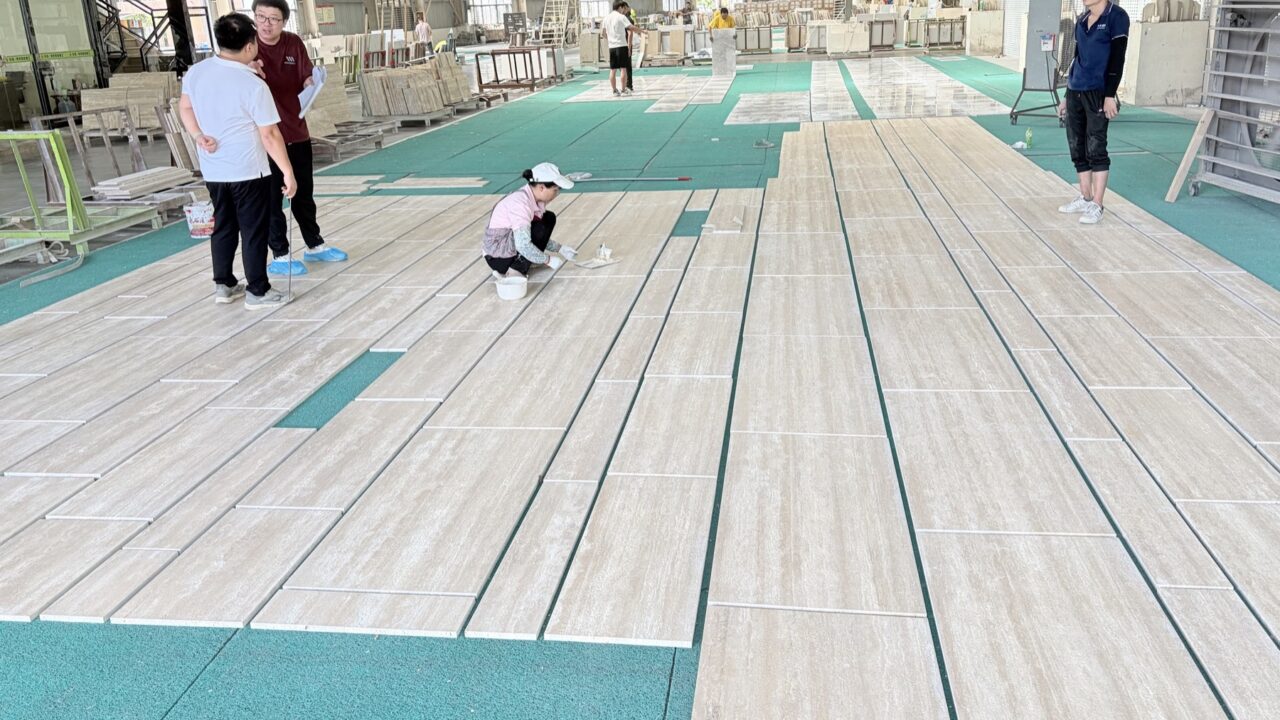
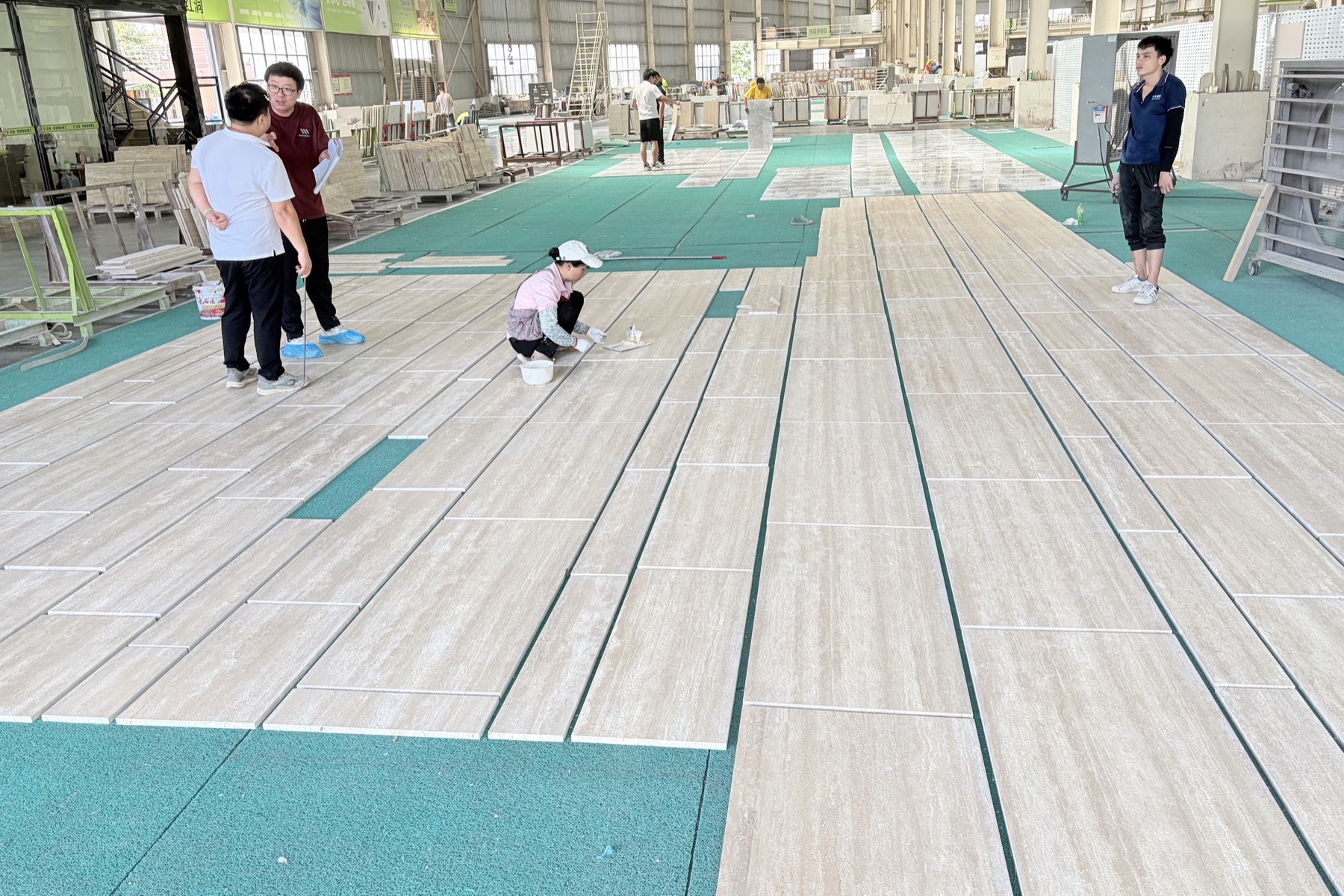
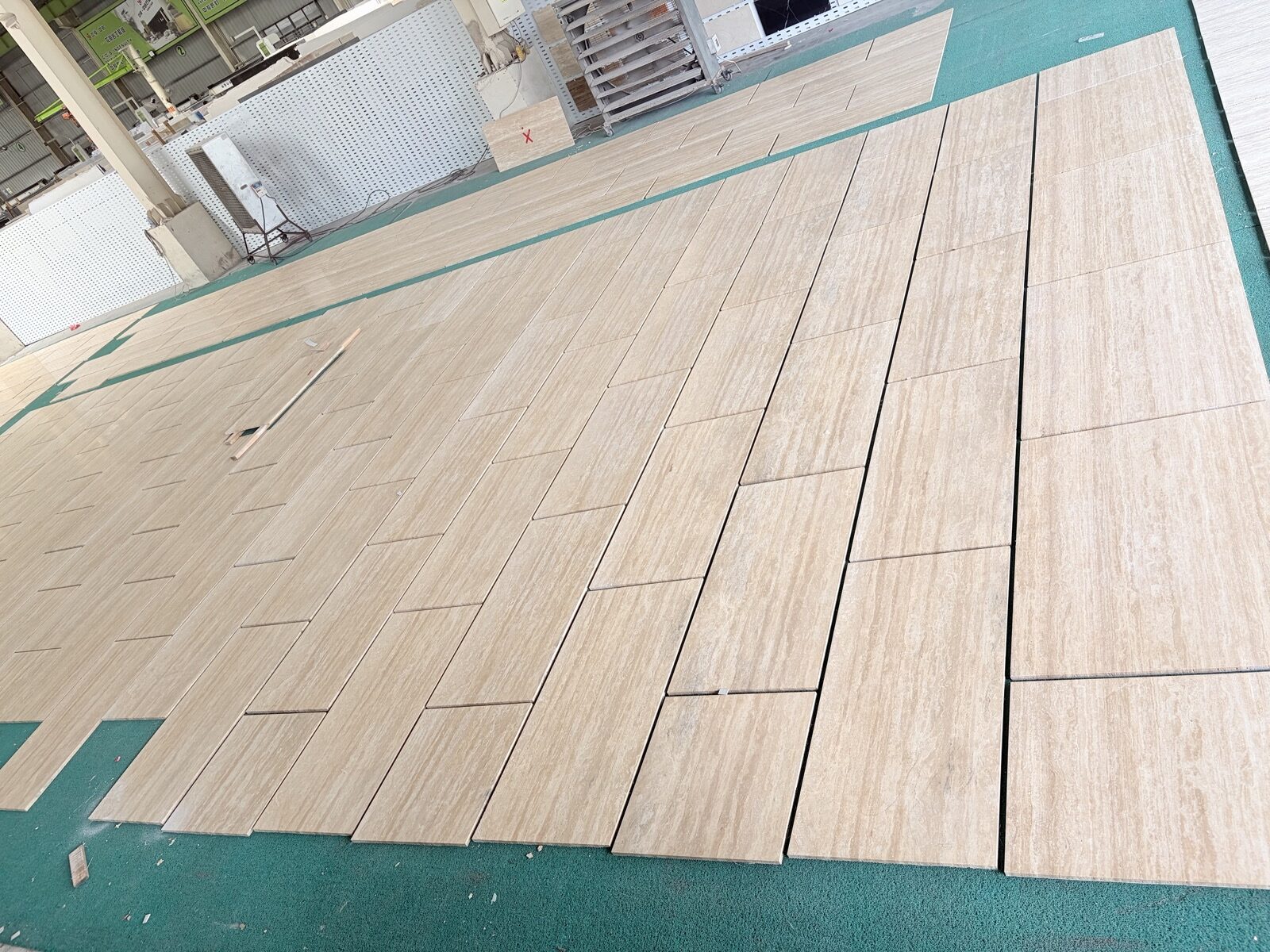
- Dry-laid and inspected — batch, thickness and tone
- Sealed before setting
- Back-buttered, set, non-sanded grout
- Grout sealed after cure
None of this is exotic. That is the point — travertine is a workable material that rewards a methodical installer and punishes a hurried one, and the failure modes are all visible in advance if somebody is looking.
Sources: substrate preparation, thinset, grout, sealing sequence and exterior finish guidance as given in tile and stone installer documentation from established suppliers in the North American and European markets; freeze-thaw and slip guidance consistent with tile and stone trade association recommendations.
Questions this article answers
Which country does my travertine come from?
We buy from seven: Turkey, Iran, Italy, Spain, Mexico, Pakistan and China, and they are not variants of one product. Turkish and Iranian material is strongly bedded and openly porous, which is what takes the classic vein-cut face. Italian and Spanish material is pale and fine-pored enough to take a high polish. Pakistani material is widely traded under this name and is mostly reef limestone, a different rock entirely. Chinese material covers several provinces that differ from each other as much as the countries do. They saw at different rates and take different fillers, so a quote that names no origin cannot be compared with another quote. We state the origin before we state a price, and we cut and finish all of it at our own base.
How is your travertine graded?
On what actually varies in the material rather than on a colour name. The grading question for travertine is how open the voids are, how deep they run, how regular they are, and whether the tone holds across the lot -- plus, where it matters, which producing region it came from and whether it is filled. A colour name carries none of that information, which is why two lots sold under the same name can arrive as visibly different stone.
Filed under Care & Installation