Projects & Applications
Vein-Cut Cladding, Panelled Furniture and the Forms That Show the Stone
Some travertine is used for the wall and some for the object. The second kind is far more demanding, because a bathtub or a table has to be carved out of one block and the block has to be chosen before anyone knows what it will yield.
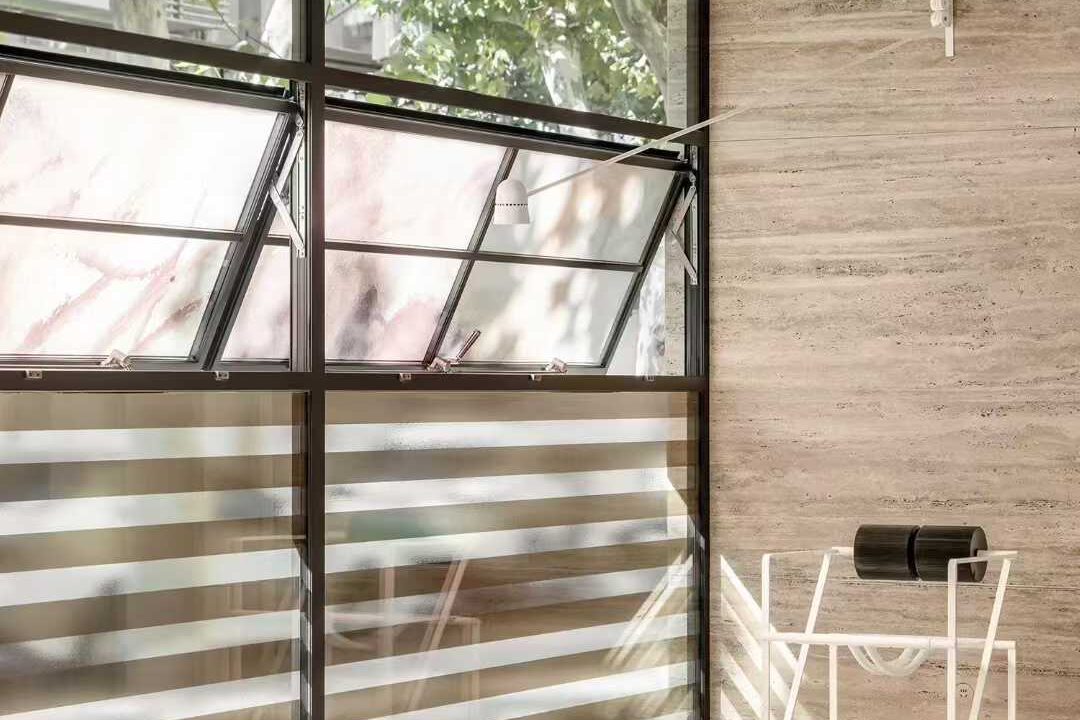
Most travertine is bought for a flat surface: a floor, a wall, a tile. A smaller but more demanding share is bought as a carved object — a bathtub, a basin, a table, a column. The two categories have almost nothing in common commercially, because the first is a sheet material and the second is a block that has to be chosen for what it will become.
The wall: bedding is the design
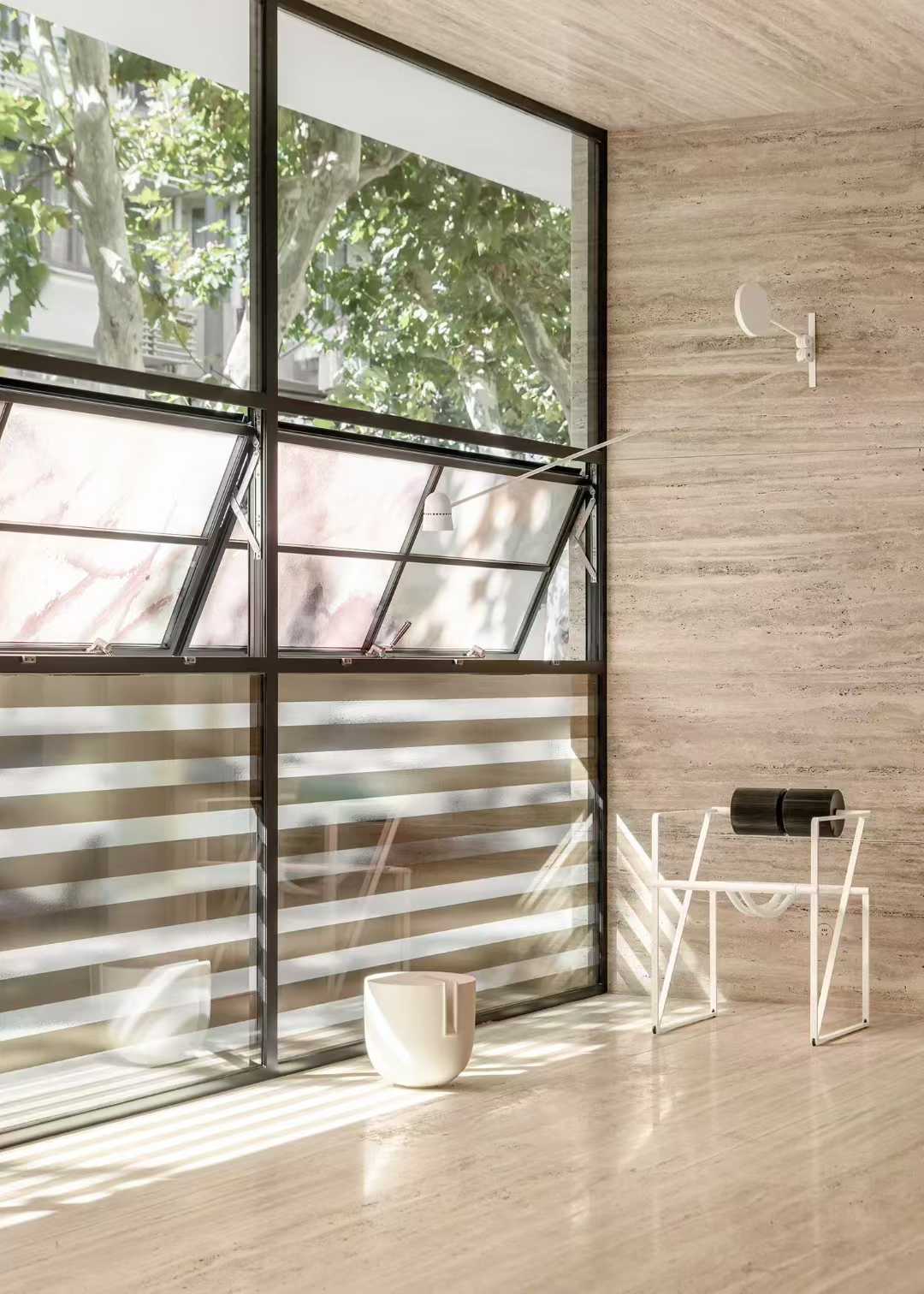
Vein-cut travertine is cut across the bedding, and that single decision produces the linear movement everyone recognises as travertine. Cut with the bedding, the same stone gives a fine, closed, cloudy surface. Both are legitimate; only one of them is called vein-cut.
For a wall elevation, the specification that matters is the face. Because travertine bedding varies considerably within a single block, the face should be agreed from a photograph of the sawn surface before cutting starts, not chosen from a slab in a showroom. Where the elevation is large, book-matching — cutting adjacent pieces from mirrored positions in the same block — is what turns a run of slabs into a designed surface rather than a wall.
Where travertine wraps a corner or an internal angle, the detailing decides whether it looks deliberate. A mitred return in a solid piece, profiled and worked rather than butted, is the difference between cladding and a photograph of cladding.
The object: choosing the block before knowing the yield
A carved travertine piece starts with a block nobody has seen cut. That is the whole problem, and it is why carved travertine is quoted on estimated yield rather than on dimensions alone.
Three things decide whether a block will make the piece:
Block size. A bathtub is a single mass. Whether the block is large enough to yield it in one piece, or has to be assembled from sections, changes the cost, the joint count and the visual answer completely. Ask the question before anything else.
Density and internal structure. A block that looks beautiful on the outside can carry voids that run through the section the piece needs. For a tub or a basin this is a safety and a sealing question, not a cosmetic one. This is why carved travertine is nearly always filled: a permanently wet vessel in a porous limestone is the one place filling is never optional.
Block size against weight. These pull in opposite directions. A larger piece is more impressive and considerably heavier. A filled solid bathtub around 1700 mm long is on the order of a tonne, and that figure decides the floor loading, the access route and whether a crane is involved before it decides anything about how the tub looks.
Furniture: the underside matters more than the top
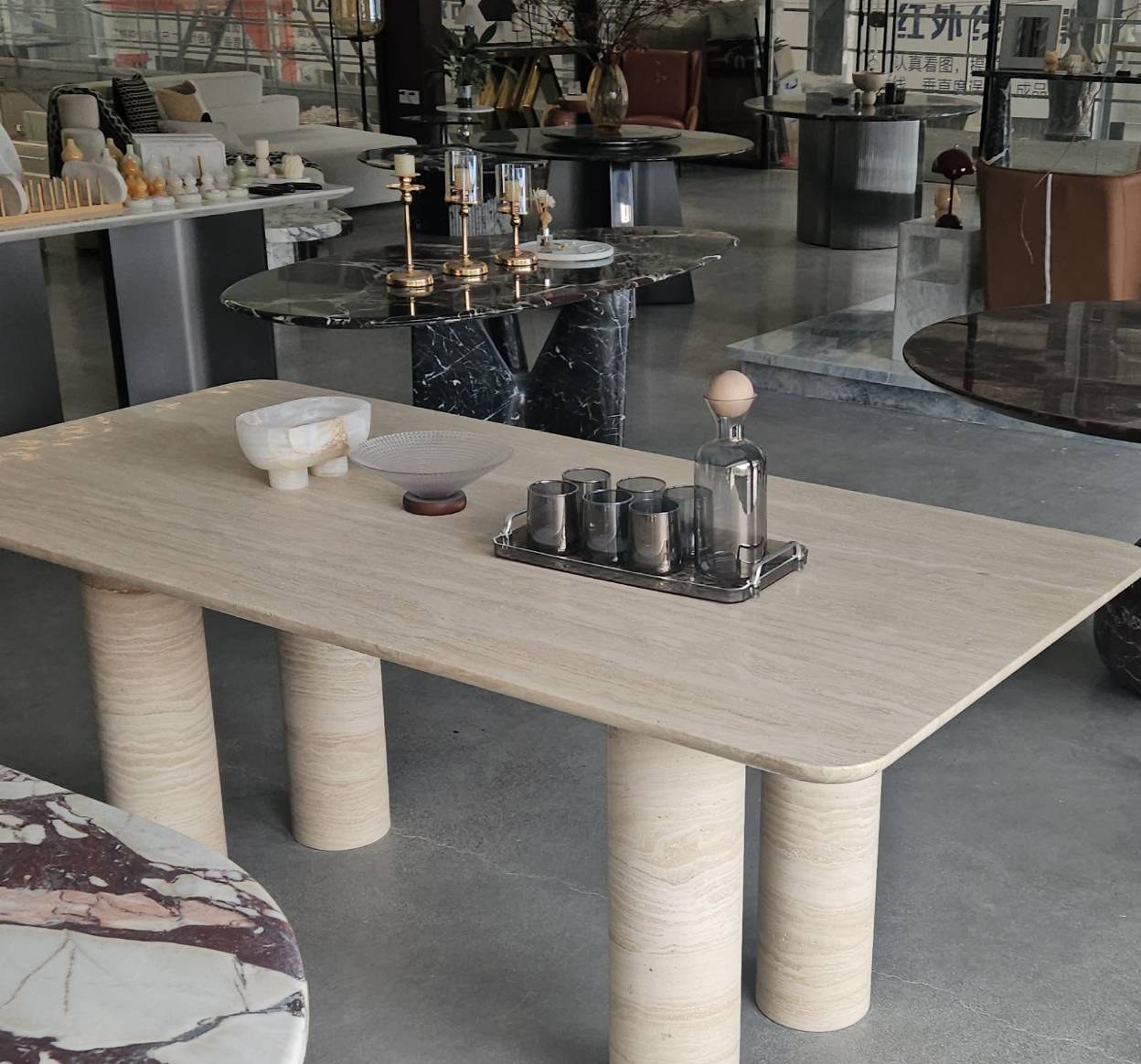
A travertine table is normally specified by its top surface, and the top is the least demanding part to make. What distinguishes good from poor is underneath: the underside of a top, the inside faces of the legs, and the junction between the two.
On a carved piece this shows as the difference between a top that was surface-finished only and one that was finished all round. The edges have to hold an arris — a crisp arris is what separates a stone edge from a rounded one, and rounded arrises are the signature of a piece that was never properly finished through. On a base or a plinth the same rule applies, and a plinth with a rounded arris looks wrong at the floor line in a way that is immediately visible.
What to ask, whichever form it is
- For a face that will be seen: can I approve a photograph of the sawn face before cutting?
- For a carved piece: will it come from one block or assembled sections, and what is the estimated yield?
- For anything holding water: is it filled, and by what?
- For a solid piece: what is the weight, and has the floor been considered?
- For anything with edges: are the arrises profiled through, not just the faces?
Those five questions separate a quotation from a photograph. A supplier who answers all five has understood what the piece is for, and one who answers none of them is quoting a shape rather than an object.
Sources: vein-cut and bedding description consistent with stone industry technical literature; carving, filling and finishing practice as described in fabricator and supplier documentation; weight figures computed from stated volumes and published density ranges and are estimates, not measured values.
Questions this article answers
Which country does my travertine come from?
We buy from seven: Turkey, Iran, Italy, Spain, Mexico, Pakistan and China, and they are not variants of one product. Turkish and Iranian material is strongly bedded and openly porous, which is what takes the classic vein-cut face. Italian and Spanish material is pale and fine-pored enough to take a high polish. Pakistani material is widely traded under this name and is mostly reef limestone, a different rock entirely. Chinese material covers several provinces that differ from each other as much as the countries do. They saw at different rates and take different fillers, so a quote that names no origin cannot be compared with another quote. We state the origin before we state a price, and we cut and finish all of it at our own base.
How is your travertine graded?
On what actually varies in the material rather than on a colour name. The grading question for travertine is how open the voids are, how deep they run, how regular they are, and whether the tone holds across the lot -- plus, where it matters, which producing region it came from and whether it is filled. A colour name carries none of that information, which is why two lots sold under the same name can arrive as visibly different stone.
Filed under Projects & Applications