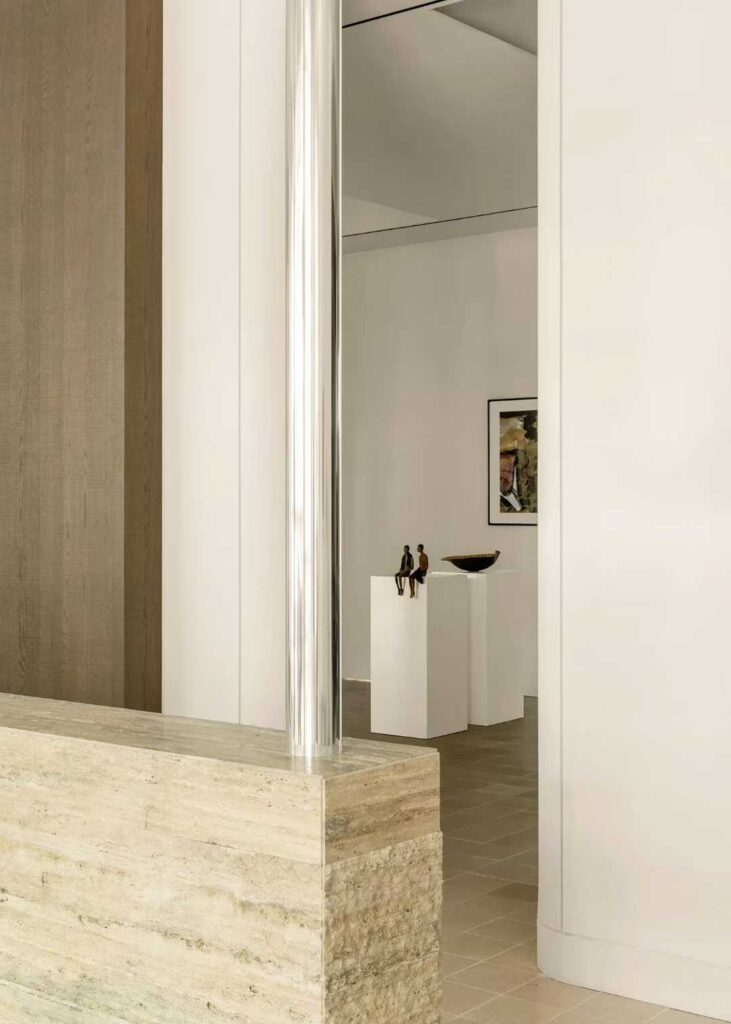
Travertine Threshold and Sill
| Form | Threshold and Sill |
| Finish | Honed |
| Color tone | — |
| Thickness | 16 / 18 / 20 / 30 mm |
| Origin | China |
| Indicative price | Indicative FOB: quoted against form, fill state, thickness and quantity. Send a thickness, a quantity, a finish and a destination port for a real figure. |
A traffic-bearing, always-wet position. Matte only, and the fill state is a durability decision rather than an appearance one.
Specification
- Thickness: 20 mm and 30 mm
- Widths: Cut to the opening; 150-400 mm typical
- Fill state: Filled as standard — wet, trafficked, and hard to replace
- Finish: Matte only; honed acceptable, polished is a slip risk at a door
- Detail: Slope to the drainage side where the sill is in an open position
- Density: 2.4-2.7 g/cm3
How this one behaves on site
A traffic-bearing, always-wet position. Matte only, and the fill state is a durability decision rather than an appearance one.
A threshold is the least glamorous form on this site and the one that fails most predictably, because it sits where feet, water and grit all meet and because it is almost always the last thing replaced.
The failures are known. Unfilled at an external door drinks water at both faces and spalls at the edge in a hard winter. Polished at a door becomes a slip risk the first time it rains. A level threshold with no fall traps water at the ends of the door opening and carries it into the interior. All three are avoidable at the specification stage.
So: filled, matte, and sloped to the drainage side on any sill exposed to weather. Where the sill is internal — between a lobby and a corridor, between two finished rooms — honed is acceptable and the fill is less critical, though still preferred.
One more practical point on widths. Sills are sold by finished width, and a wider sill is not only a better threshold but a better detail at the jamb, where the arris on a narrow sill chips from the door hardware. Where the drawing allows, wider is the better decision.
Ordering and supply
12-20 working days to FOB for standard forms; cut-to-size and matched sets are quoted per job. Send a thickness, a quantity, a finish and a destination port and you will have an FOB quotation, usually within three working days, with no obligation on a first shipment.