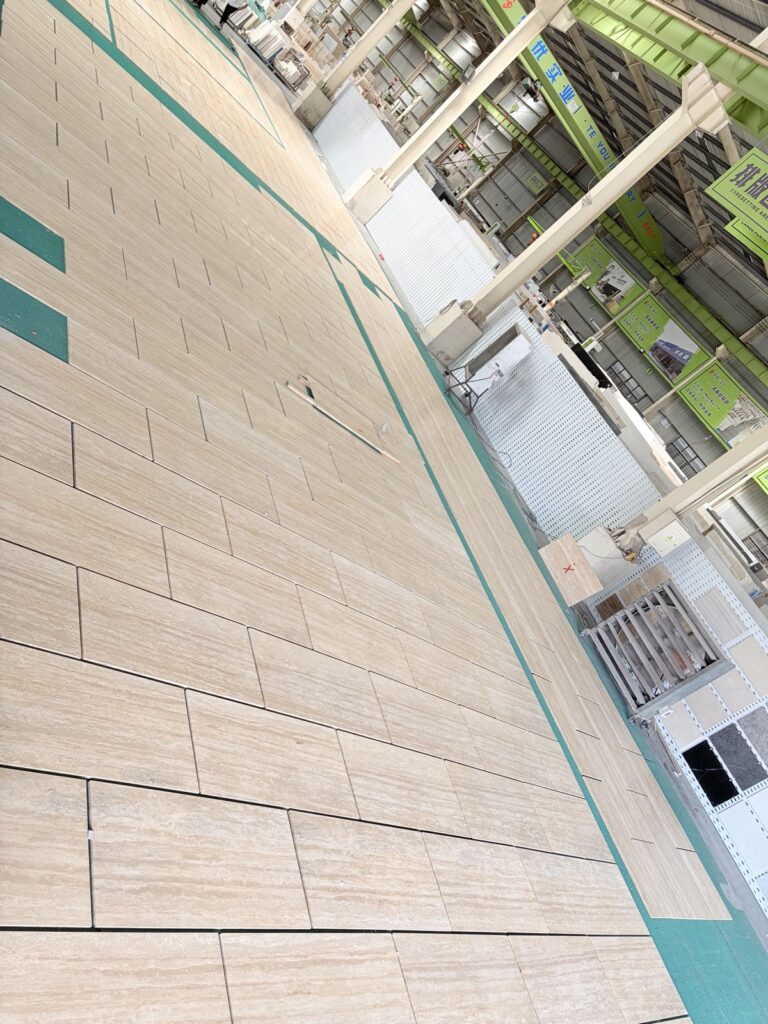
Cross-Cut Travertine Panel
| Form | Cross-Cut Panel |
| Finish | Honed |
| Color tone | — |
| Thickness | 16 / 18 / 20 / 30 mm |
| Origin | China |
| Indicative price | Indicative FOB: quoted against form, fill state, thickness and quantity. Send a thickness, a quantity, a finish and a destination port for a real figure. |
Cut across the layers as well as the bedding, which opens the structure into a more linear, more graphic face than the vein cut gives.
Specification
- Thickness: 20 mm and 30 mm
- Formats: 1200×600, 1200×1200, 2400×1200 mm
- Cut: Cross-cut — across both bedding and layer
- Fill state: Unfilled; filled version quoted separately
- Finish: Honed or matte
- Appearance: Open linear structure; the void runs read as drawing
- Density: 2.4-2.7 g/cm3
How this one behaves on site
Cut across the layers as well as the bedding, which opens the structure into a more linear, more graphic face than the vein cut gives.
Cross-cut is the more graphic of the two bedding cuts and it is the one to specify when the wall has to be looked at rather than walked past. Where the vein cut gives a directional movement that reads as natural stone, the cross cut opens the structure into something closer to drawing — parallel linear voids running across the panel face.
The trade-off is structural appearance. A cross-cut face has more open void area than a vein-cut face, so it is more vulnerable to the three things that hurt unfilled travertine: chipping at the arris, water at the voids, and differential shadowing under raking light. On a facade that gets sun at a low angle across the day, the shadow effect is part of why this material is used there, and part of why the detailing has to be right.
Fix mechanically from behind, never with adhesive on the face — adhesive on an open-vein face leaves a shadow line around each fixing point that cannot be made good later. Panels are supplied with a sawn, calibrated back; a sawn back is not a finished back and the substrate behind it has to take the flatness.
Ordering and supply
12-20 working days to FOB for standard forms; cut-to-size and matched sets are quoted per job. Send a thickness, a quantity, a finish and a destination port and you will have an FOB quotation, usually within three working days, with no obligation on a first shipment.