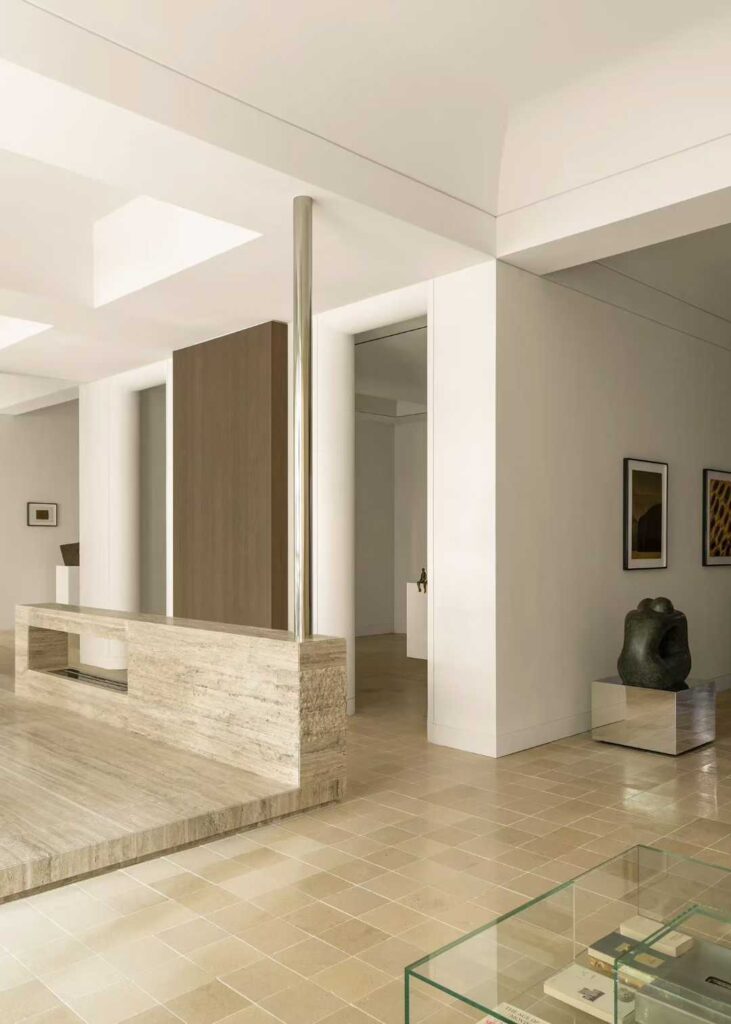
Travertine Kitchen Counter and Worktop
| Form | Kitchen Counter and Worktop |
| Finish | Honed |
| Color tone | — |
| Thickness | 16 / 18 / 20 / 30 mm |
| Origin | China |
| Indicative price | Indicative FOB: quoted against form, fill state, thickness and quantity. Send a thickness, a quantity, a finish and a destination port for a real figure. |
The most-specified cut-to-size form, and the one with the clearest thickness rule: 20 mm sits on a cabinet, 30 mm is needed anywhere the stone overhangs.
Specification
- Thickness: 20 mm on a cabinet; 30 mm for overhangs and unsupported runs
- Lengths: Up to 2700 mm per piece; longer runs jointed or mitred
- Fill state: Filled as standard for kitchens; unfilled available
- Finish: Honed or matte; polished is not recommended at a sink run
- Edge: Eased, bullnose or mitred; a 20 mm arris chips in use
- Sink: Undermount recommended; the slab is not the weak point
How this one behaves on site
The most-specified cut-to-size form, and the one with the clearest thickness rule: 20 mm sits on a cabinet, 30 mm is needed anywhere the stone overhangs.
A kitchen worktop is the hardest domestic position this stone goes into, and the failures are predictable enough to design out.
The first is the overhang. At 20 mm an unfilled travertine top will sag visibly at any unsupported run longer than about 200 mm, and it will crack eventually rather than immediately. At 30 mm the same overhang is comfortable. This is a thickness rule, not a preference.
The second is the sink area. Water sits around a sink, and an unfilled stone there drinks it, takes stain, and carries a sealer cycle that the client has to remember. Filling the top removes almost all of that, which is why filling is the standard here rather than an option. Polished is not recommended at a sink run for the same reason — it is the surface that shows the water ring first.
The third is the edge. A square 20 mm arris on a worktop is going to chip at the front of a sink run within a few years, and the chip will be at the most visible place on the piece. Eased or bullnosed, filled, 30 mm at the overhang: those three decisions remove almost every failure mode we know of for this material in this position.
Ordering and supply
12-20 working days to FOB for standard forms; cut-to-size and matched sets are quoted per job. Send a thickness, a quantity, a finish and a destination port and you will have an FOB quotation, usually within three working days, with no obligation on a first shipment.