Material Basics
Travertine, Marble or Limestone: Choosing Before You Order
All three are calcium carbonate. That shared geology is why they look related and behave completely differently once cut into a floor or a wall. Here is the decision, in the order it actually has to be made.
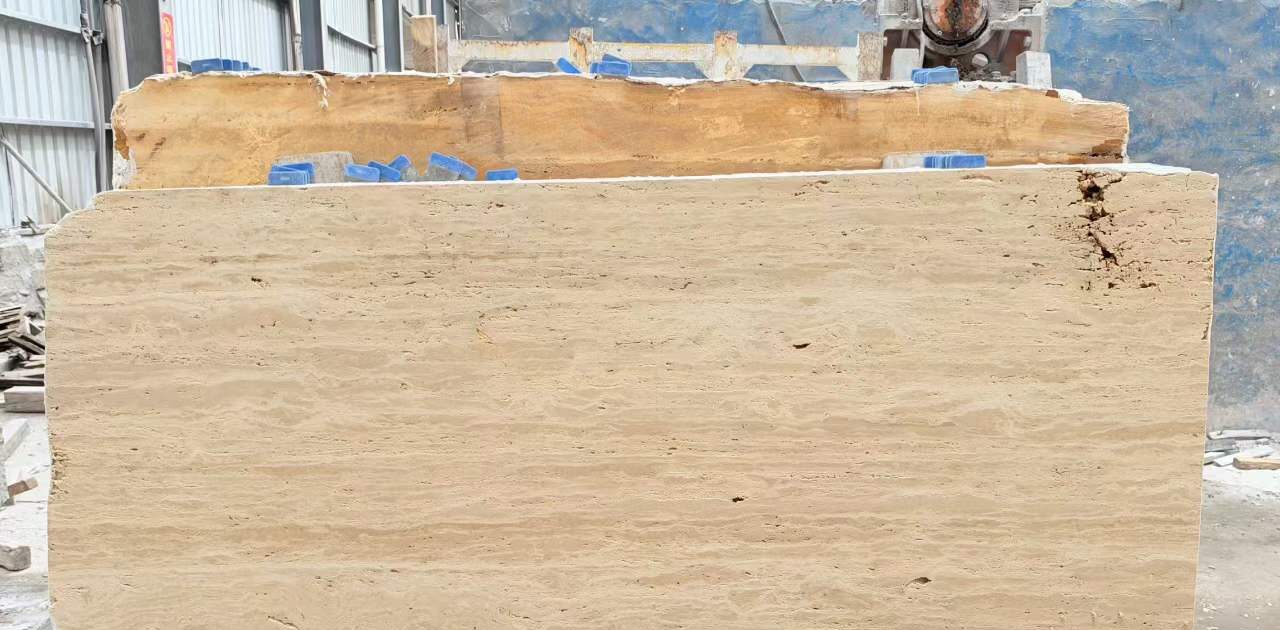
The comparison is usually framed as a matter of taste, and then settled on price. That order gets it wrong. All three stones are calcium carbonate: limestone forms on ancient seabeds, travertine is the hot-spring variety of limestone, and marble is what limestone becomes after enough heat and pressure to recrystallise it. The shared chemistry is why vinegar etches all three, and it is also why their differences are mostly about structure rather than composition.
Start with where the water is
This is the question that decides most of it, and it is asked before anyone looks at a colour card. Travertine is a sedimentary rock with open pore structure formed around mineral springs — it comes out of the ground full of voids. Marble recrystallises into a dense crystalline structure with essentially no open porosity, which is why a dropped coffee on polished Carrara leaves a mark that stays. Neither is better. They fail in opposite ways, and the way a stone fails decides which rooms it belongs in.
Travertine absorbs water into its own structure. Marble reacts with it on the surface. A sealed travertine floor wipes clean; an unsealed one holds a stain in depth where a poultice cannot reach it. A polished marble counter etches at the top layer and can sometimes be re-polished out; travertine simply takes the colour into the pores. For a kitchen worktop that gets lemon juice on it daily, that is an argument against travertine. For a pool surround where the surface is wet anyway and the material stays cooler underfoot in sun, the same property is the reason to specify it.
The porosity number, and what it obliges you to do
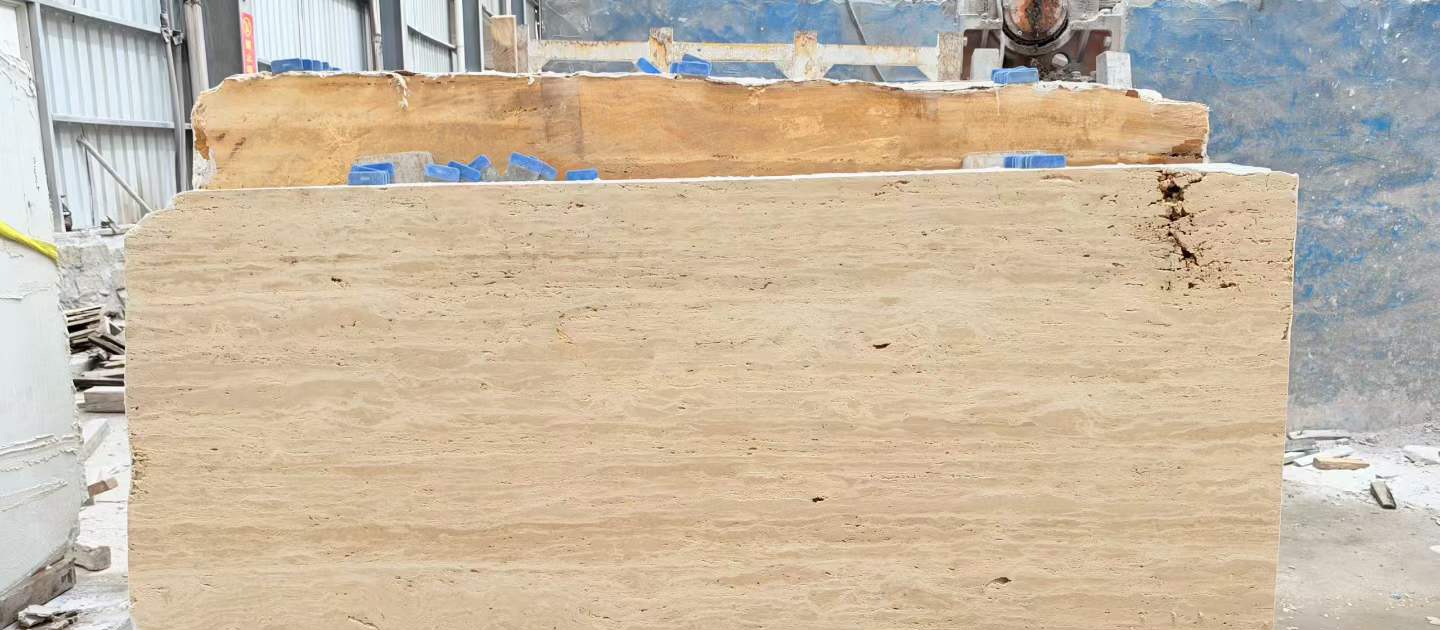
Published water absorption for unfilled travertine is commonly given as roughly 3-8% by weight; industry product literature for filled and honed travertine puts it below 1%. Those are published ranges, not figures for any particular lot, and the reason to quote them is that they tell you what has to happen next.
A material that absorbs 3-8% of its weight in water cannot go into a permanently wet position unfilled. Not because it will fail quickly, but because the water sits against it and the maintenance regime becomes permanent. Travertine used in showers, around pools, in bathroom floors and in anything outdoors is resin filled and sealed as standard. That is not a premium option and it is not optional. Filled material then reads differently — smoother, more even in tone, slightly less open in character — and that is the trade being made.
The finish decides the safety, not the colour
Two finishes are worth separating because they behave in opposite directions. Honed and brushed surfaces are matte and offer measurable grip when wet. Polished travertine becomes slippery when wet, and polished stone outdoors is a documented slip hazard. Tile and stone trade guidance is consistent on this: for pool decks, patios and outdoor walkways, specify a slip-resistant finish, and treat polished outdoors as a specification to be questioned rather than admired in a photograph.
What each one is actually for
- Travertine — pool surrounds, patios, outdoor walkways, bathroom floors and walls, and anywhere the warm, slightly open surface is wanted deliberately. Needs sealing, and filling in wet positions.
- Marble — indoor floors, wall cladding, bathroom walls, fireplaces and anything where the veining is the point. Needs careful sealing and prompt spill response, and acid-sensitive even when sealed.
- Limestone — walls, cladding, floors in lower-traffic positions, and exteriors where a quieter, more uniform surface is wanted. Generally more porous than marble and more consistent than travertine.
Cost, honestly
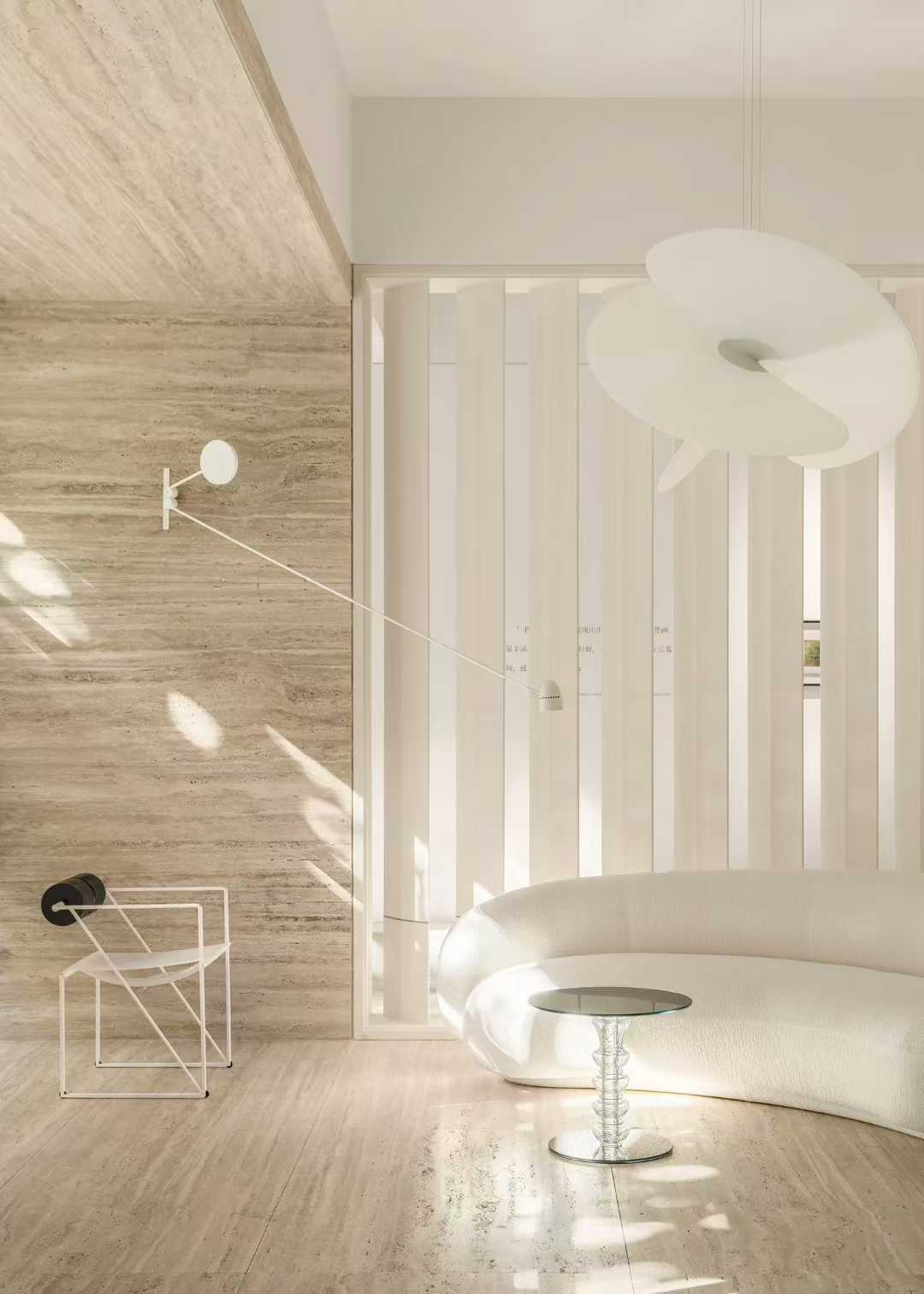
Origin affects price more than quality does. Retail sources in the United States commonly price Italian travertine at a substantial premium over Turkish, and the premium is substantially attributable to provenance and brand rather than to measured performance — several suppliers state plainly that installed premium Turkish and premium Italian are not distinguishable in use. Where a project needs one specific look, that is a reason to buy the specific origin. Where it needs a good travertine floor, origin is a decision to make deliberately rather than one to accept by default.
The short version
Wet positions and outdoor positions: travertine, filled and sealed, with a non-polished finish. Indoor floors and walls where veining is wanted: marble. Walls, cladding and quieter floors: limestone. And in every case, ask for the water absorption figure for the lot being supplied rather than the range for the material — that single number is what determines the maintenance regime for the next twenty years.
Sources: water absorption ranges as published in stone industry product literature and installer guidance; finish and slip guidance consistent with tile and stone trade association recommendations. Figures are published ranges for the material, not test results for any individual lot.
Questions this article answers
Which country does my travertine come from?
We buy from seven: Turkey, Iran, Italy, Spain, Mexico, Pakistan and China, and they are not variants of one product. Turkish and Iranian material is strongly bedded and openly porous, which is what takes the classic vein-cut face. Italian and Spanish material is pale and fine-pored enough to take a high polish. Pakistani material is widely traded under this name and is mostly reef limestone, a different rock entirely. Chinese material covers several provinces that differ from each other as much as the countries do. They saw at different rates and take different fillers, so a quote that names no origin cannot be compared with another quote. We state the origin before we state a price, and we cut and finish all of it at our own base.
How is your travertine graded?
On what actually varies in the material rather than on a colour name. The grading question for travertine is how open the voids are, how deep they run, how regular they are, and whether the tone holds across the lot -- plus, where it matters, which producing region it came from and whether it is filled. A colour name carries none of that information, which is why two lots sold under the same name can arrive as visibly different stone.
Filed under Material Basics